

Supporting women through every life phase
How vibration training fits into the women’s health conversation
Women make up half the population. So why has it taken so long for the health and fitness sector to recognise that programming for longevity and healthspan needs to account for female physiology at every stage of life?
From menstrual cycles in younger women to the hormonal shifts of perimenopause and menopause, female physiology changes in ways that directly affect bone health, muscle mass, recovery, metabolic function and even cognitive health. Yet historically, exercise science and programming have largely been built around male physiology.
Today, that gap is becoming impossible to ignore.
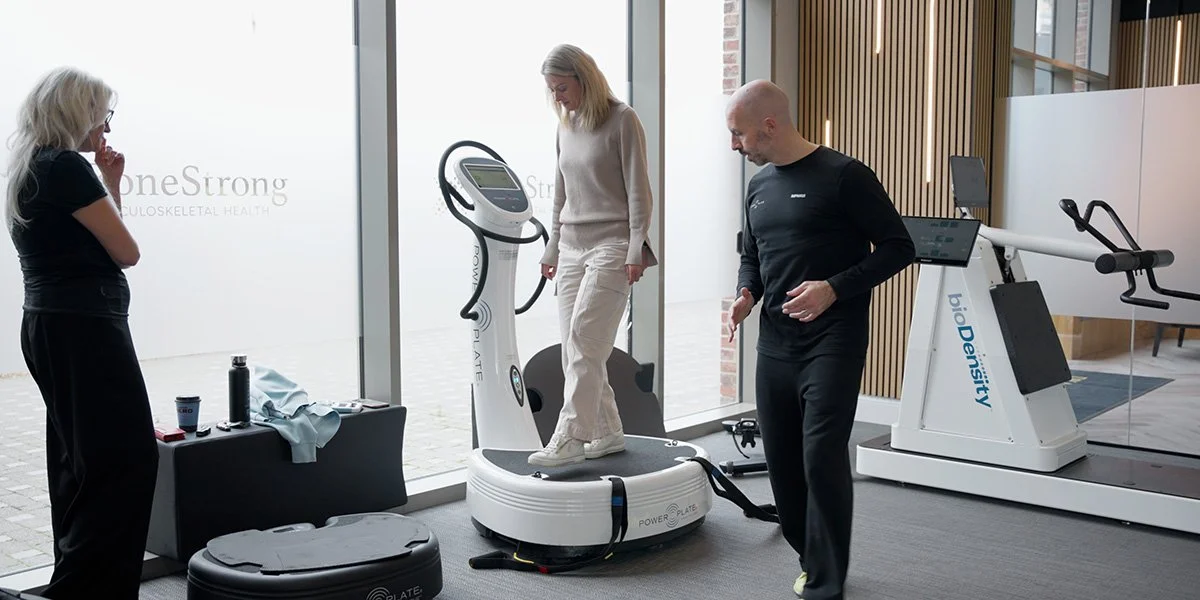
Steve Powell, Director of Education for Power Plate®, and Master Trainer Natt Summers explain how operators can better support women – and where vibration training and supporting technologies such as red light can play a role.
Why should we view women’s health through the lens of longevity?
Approaching women’s health through the lens of longevity provides a much clearer framework for operators.
Longevity isn’t simply about living longer. It’s about maintaining the capacity to live well – physically, metabolically and cognitively – for as many of those years as possible. Within this framework, three pillars underpin healthy ageing: functional capacity, tissue and metabolic health, and brain health.
Every intervention in a fitness environment feeds into these pillars, whether it’s strength training, cardiovascular work, recovery strategies, even community and behavioural support. Understanding how women move through the different life phases – and how training can support these three pillars at each stage – is therefore essential for operators who want to support female members across the decades.
Looking at women’s health in this way also broadens the conversation beyond (peri)menopause alone. That phase is important, but the foundations for healthy ageing in women are laid much earlier – and the opportunity to support them continues long after.
Let’s start with younger women. What’s the focus here?
One of the most important and often overlooked priorities is bone health. Peak bone mass is typically reached at the age of about 30, meaning the foundation for skeletal health in later life is largely built during a woman’s teens and twenties. If that window is missed, it becomes far harder to rebuild later.
The difficulty is that advice around bone health is often quite generic: resistance training, impact exercise, weight-bearing activity. While all of these are helpful, bones respond most strongly to specific signals such as compressive loading and muscular tension pulling on bone through tendons.
Whole-body vibration (WBV) training can amplify these signals by creating rapid micro-contractions in muscle tissue that increase mechanical loading across the skeletal system. In turn, this stimulates bone regeneration without requiring large volumes of training.
For younger women balancing work, family and social commitments, this efficiency can be particularly valuable.
But it’s important to train in a specific way to optimise bone health. At Power Plate, we’ve therefore created WBV programming protocols designed specifically to improve bone density, which should be applied once a week as the minimum dose. As a side benefit, these protocols also support muscle mass and pelvic floor strength.
How does the menstrual cycle affect training?
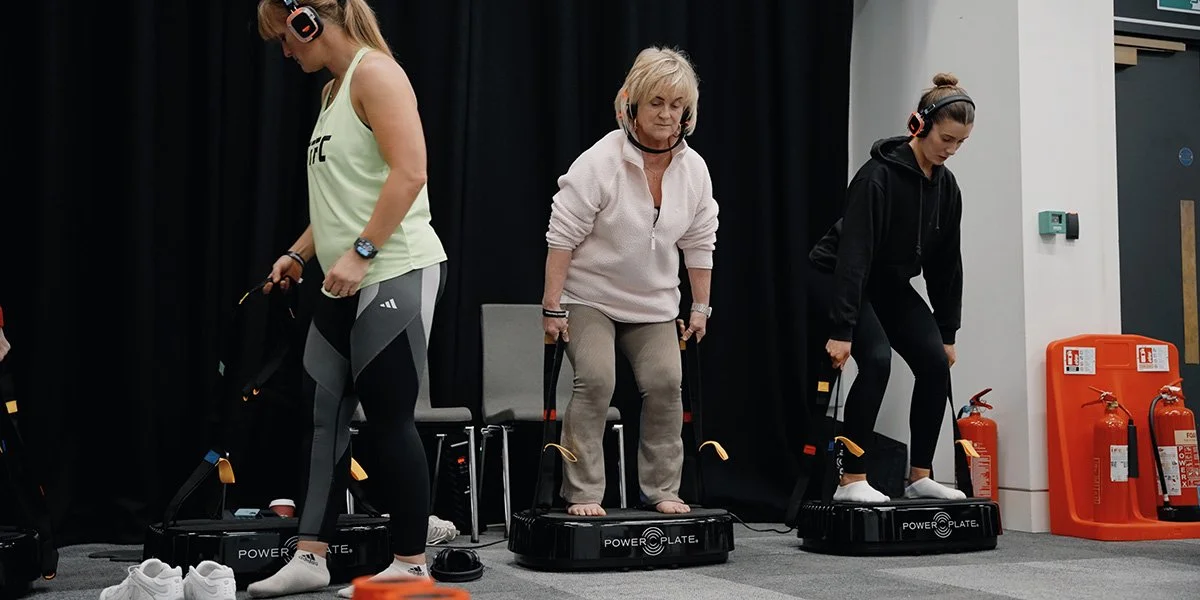
There’s a growing discussion around whether women should train completely differently from men because of hormonal cycles. However, we feel a more useful perspective is to help women understand their own physiological responses and adjust training intelligently when needed.
At certain points in the menstrual cycle, sleep quality may drop, recovery may feel slower and/or fatigue levels may increase. That doesn’t necessarily mean training should stop, but it may mean adjusting training volume or session duration.
The advantage of vibration training is that it allows women to maintain a strong neuromuscular stimulus even in shorter sessions with a lower mechanical load. In other words, they can still train effectively without pushing the body beyond what it can recover from at that moment.
The goal isn’t rigid programming. It’s giving women the flexibility and awareness to adapt while maintaining consistency.
Where does recovery fit in?
When the focus shifts from short-term performance to long-term health, recovery becomes just as important as the training stimulus itself.
One system receiving a lot of attention right now – including among the social media influencers targeting younger women – is the lymphatic system. This plays a crucial role in immune function, waste removal and reduction of inflammation, but unlike the cardiovascular system, it doesn’t have a central pump. Instead, it relies largely on muscular contractions and body movement to circulate fluid through the body.
That’s why exercise is so important after treatments such as lymphatic massage and why WBV is a great choice, as it activates the large muscle groups and speeds up the process of lymph drainage.
Moving into perimenopause, what changes?
Physiologically, the underlying training priorities remain the same: the longevity pillars still apply. What changes is often the entry point.
For many women, perimenopause is the stage at which they suddenly become more aware of the need to prioritise their health, including developing muscle mass to manage weight gain and avoid metabolic issues. However, they might be unsure of where to start.
That’s where accessible entry points become important. One of the common patterns seen during perimenopause is that women become overwhelmed, feeling the need to do everything at once: they read about strength training and longevity protocols, try to adopt multiple new routines simultaneously and often push themselves too hard in the early weeks.
Rather than aim for volume, a more sustainable approach is to focus on consistency and issuing the right signals to the body. WBV can support this, triggering strong neuromuscular activation without immediately jumping into high training volumes or heavy loading.
Bone health becomes even more important at this stage. Why?
Hormonal changes during perimenopause, particularly declining oestrogen levels, naturally accelerate bone loss. However, we can effectively intervene with protective strategies: bone is an endocrine organ, a living tissue that remodels and adapts to the forces placed upon it.
As noted previously, bone health is closely linked to muscle mass, strength and mechanical loading: if muscle mass declines and strength drops, the body simply cannot generate the mechanical stimulus required to maintain bone density. That’s why strength and power development remain critical.
However, methods of power training embraced in younger years – jumping, running and so on – may not be suitable now, as deterioration of collagen causes pelvic floor muscles to weaken. Vibration training is the ideal solution, amplifying the mechanical signals that bones respond to – compressive loading, muscular tension and varied stimulus – with relatively low impact.
For women managing joint discomfort, reduced recovery capacity and pelvic floor weakness – all common perimenopausal complaints – WBV can provide a practical way to address these specific issues and maintain bone density at the same time.
Are there recovery tools that can help during this phase?
Recovery becomes particularly important during perimenopause, as hormonal fluctuations can influence sleep, inflammation and stress levels.
As noted previously, WBV is an excellent recovery tool – one that’s also suitable for combination therapy, sometimes referred to as ‘biostacking’. Using it in conjunction with technologies such as red light therapy can further support recovery, helping regulate inflammation and mood, supporting mitochondrial function and potentially improving sleep quality.
Indeed, many women who combine vibration training with red light sessions report a noticeably easier transition through perimenopause, particularly when it comes to managing fatigue, stress and overall resilience.
What about the post-menopause years?
Interestingly, many women feel physically more stable once hormone fluctuations settle; energy levels may improve and training can become more consistent again.
Lower-body strength and power should be a headline in women’s health conversations for this age group, yet they are often overlooked, with one key reason being dynapenia: the age-related decline in strength and, crucially, power.
Compounding this are some longer-term changes that remain post-menopause: connective tissues may be less resilient, joints can feel stiffer and injury risk can increase if training progresses too aggressively.
This is where WBV again becomes particularly valuable.
Traditional power training typically relies on fast, explosive movements to recruit and train fast-twitch fibres – but not everyone has the structural capacity, confidence or joint tolerance to jump, sprint or lift explosively.
WBV offers an alternative route: when programmed correctly and progressed intelligently, vibration provides a rapid neuromuscular stimulus that can support power-oriented adaptations without requiring explosive movement. For many women, that makes it a potent yet practical intervention.
And power matters: the ability to produce force quickly is increasingly recognised as one of the strongest predictors of healthy ageing. It supports balance and mobility and is linked with improved blood flow to the brain, which can positively influence cognitive function. In short, powerful legs don’t just carry the body – they nourish the brain.
What are women’s training needs in later life?
As women move into older age, focus often shifts towards maintaining independence and confidence in movement. Pain, stiffness or fear of injury can cause people to reduce activity levels, but once movement declines, strength, balance and cardiovascular fitness can deteriorate quickly.
Even short vibration sessions – so-called ‘activity snacks’ or ‘movement snacks’ – can help interrupt that cycle. By improving circulation, stimulating muscle activation and reducing pain perception, they can encourage people to keep moving.
Sometimes the most important outcome isn’t the workout itself, but the confidence it restores – allowing someone to walk further, join a class or remain active in daily life.
Cardio respiratory fitness is another key predictor of longevity…
Cardiorespiratory fitness, measured as VO₂ max, is one of the strongest predictors of long-term health and longevity.
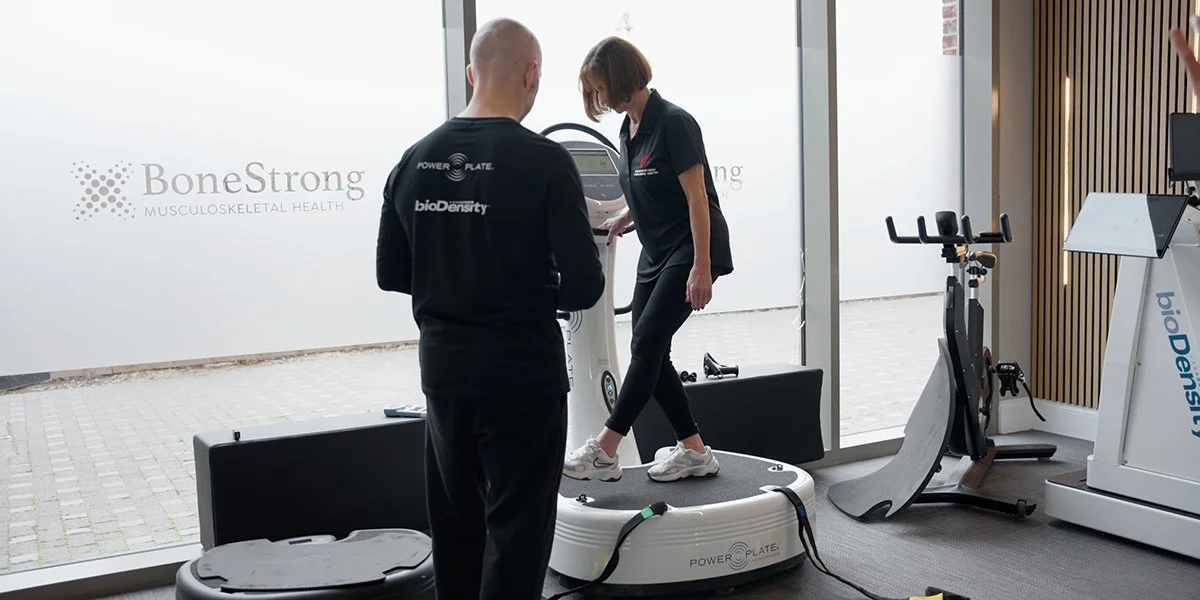
The challenge is that traditional endurance training often requires substantial time commitments, which many people struggle to maintain consistently. High-intensity interval training on the Power Plate REV bike – which delivers vibration through the pedals – offers an excellent alternative, driving meaningful improvements in cardiovascular capacity through sessions lasting little more than 10 minutes.
Again, the principle is the same: achieving the right physiological stimulus while respecting the realities of people’s time, energy and recovery capacity.
Any final tips on how operators can better support women?
First, recognise that women’s health evolves across the lifespan. If operators want to retain female members in the long term, their programming and education must evolve too, from trend-led younger women to older women seeking education and achievable ways to give their bodies what they need.
Alternatively, gyms must be honest with themselves – and with their members – about who they cater for.
Second, prioritise education and honest conversations. Women want evidence-based guidance that helps them understand what their bodies are experiencing and how training can support them.
Third, create communities that normalise these conversations. Workshops, ambassador programmes and targeted training environments can all help women feel supported rather than isolated as they move through different life stages.
Supporting women through every phase of life isn’t just a programming opportunity. It’s one of the clearest ways the fitness industry can demonstrate its value as a preventative health partner for the decades ahead.