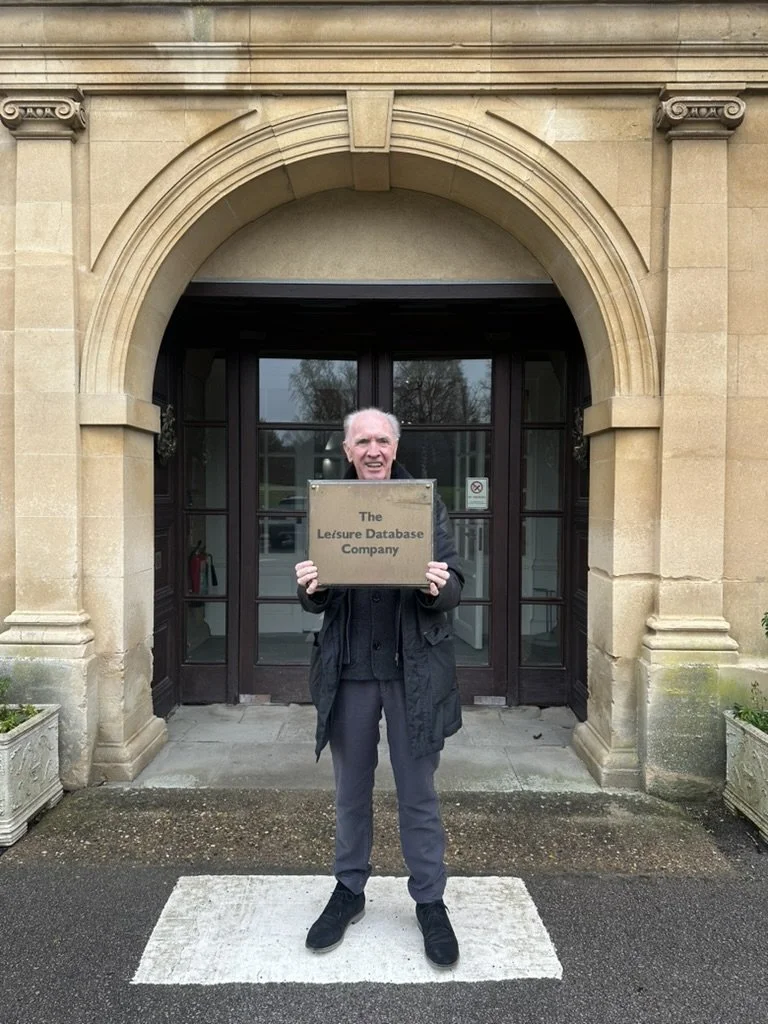

In 1980 The Leisure Database Company was registered, it started providing on-air community programmes and off-air backup telephone and mail services, a requirement from the Independent Broadcasting Authority. Our first client was Capital Radio, Kidsline service, then London Weekend Television, a two hour programme for Michael Grade called Saturday Action. The Evening Standard newspaper and Time Out magazine took listings of weekend family activities. Radio and TV provided studio time free of charge and the print media gave column inches but no one paid. We knew we had the makings of a business but where would the money come from? Regional organisations like The Greater London Council (GLC), London Region of the Sports Council and eventually all 32 London Boroughs, who were getting the benefit of free publicity and seeing increasing participation, provided some support.
Buskers from Covent Garden became the Saturday presenters, a DJ presented the radio show and a team of fulltime, parttime and volunteers collated the data for the programmes and the backup services. At this time we used a Rolodex to store the paper information. Soon we were swimming in paper so needed an early desktop computer but we didn’t have a budget. So around 43 years ago we sent a letter to Steve Wozniak at a company called Apple to ask if they would consider providing our community start-up in London with an Apple Two computer. Steve replied and our first computer came with twin floppy disc drives and a 1980s-era Monitor 2. Years later a startup company, AiT, using LeisureDB swimming data, developed a number of new products for Apple via their app store, see below. Two new technologies were starting to take off in the 80’s, teletext and email. Following the successful Apple letter we wrote to Sony. Sony produced the first desktop teletext monitor with email, the precursor to the internet and MSMail from Microsoft in 1988. Following radio and TV publicity for the 9 inch monitors Sony provided a monitor to every London local authority leisure department, the GLC leisure team and Director of London Sports Council at Crystal Palace. This was radical, we could now communicate via email to all the key people, this was game changing till the early 90’s when the World Wide Web made the internet accessible to the public and desk top computers became more widely used.
By the early 90’s it was time to move out of our collection of wet and often cold warehouses in Covent Garden with our boxes of floppy disks into a basement with a serious computer. A third letter went off to McDonnell Douglas Information Systems (MDIS) who had just sold their business to Northgate Information Solutions. We got two upright freezer style bays of computer with three hard discs so long as we employed Northgate to develop our relational database. The team that wrote that radical ahead of its time software remains friends to this day and the database, with annual updates, served the company better than ever expected. The MDIS hardware had a core memory and disk storage smaller than my current Apple mobile phone but for Leisure Database it was a big step up from the floppy disks. MDIS was also a pioneer in early digital mapping and geographical information systems which we took full advantage of. It was so exciting to see sports and fitness facilities plotted onto a map for the first time. Maps were sent to every Member of Parliament showing the number and range of facilities in their constituency. Among the backbench MPs who responded was Tessa Jowell. At the same time geodemographic classification systems grouping households or postcodes into lifestyle based segments enabled us to profile customers into groups and types to understand their propensity to participate. Dr Richard Webber, the Godfather of Geodemographics became a friend of the company. In the early 1990s we had developed our first supply demand model for the fitness industry. Soon the visualisation afforded by the mapping was being used by Ministers in Northern Ireland to understand the sectarian divide and why Belfast would end up with more sports facilities per head of population than any other city. Developers, financiers, private equity, leisure analysts and bond holders in the City of London used the data to provide comfort that there was a demand for multi-million pound investments.
While the database was growing with public leisure centres, private brands like City Squash 1979 (opened by our Chairman David Turner which became LA Fitness) Holmes Place 1980, David Lloyd Leisure 1982, Fitness First not till 1993. These had me travelling to the East End, Fulham, Heston and Bournemouth but it was Jane Fonda that got me on a plane to Los Angeles. West Hollywood became my second home for the next 30 years where I followed the new studio and group exercise trends. I went ‘spinning’ with the creator Jonny G, at Fonda’s studio on Robertson I watched as classes were transferred to VHS tapes that created the home-fitness business. In the 1990s I visited New Zealand where Les Mills BodyPump started to scale via licensing, turning group fitness into a reproducible product. By 1995 Step Reebok was at its peak in 16 countries with over 11 million participants. I went to Harrow Leisure Centre on a weekday evening to see the spectacle of up to 1,000 people filling the 8 court sports hall in a synchronized step class. It was wow. At this time all forms of group exercise helped normalise fitness at home, the studio and sports hall and the database expanded to collect information on the number of studios and classes.
In 1997 Tony Blair won a landslide victory and became Prime Minister. So many technologies were merging at this time, fitness brands were multiplying and public sector sports and leisure expanding. A time of plenty, strong growth, low inflation and the national lottery was contributing around £500 million a year to sport, one of the four good causes. Tessa Jowell became Secretary of State at DCMS with Richard Cabourn at her side as Sports Minister. Together they provided the longest period of stability, guidance and support to the sector. With so much exchequer, public and private money going into sport, leisure, fitness Jowell and Cabourn wanted to understand supply demand modelling. At the time no up to date supply data existed as no audit had ever been completed, probably since the Doomsday Book in 1085. NGBs primary interest was clubs and competitions, not facilities. Non-departmental public-bodies sponsored by DCMS had never seen the need for an up to date database. After lengthy contractual arrangements Leisure Database were awarded the contract to supply the foundation data fields for what became Active Places plus a ten year maintenance contract. Active Places was launched in 2004 in England with around 50,000 venues and up to 250 datafields on each site. At this time a team of twenty maintained the data compared to today where a number of AI Agents monitor sites on a daily basis for openings, closing, brand changes and other key data fields.
Due to a devolved government we had to go separately to other home countries. Wales agreed to participate using the same methodology, while Scotland and Northern Ireland said no. That fracture doesn’t work for young techies who want a clean uptodate UK database to work with. So NGBs and countless organisations were caught up in this bind, not to mention a frustrated DCMS. In July 2005 it was announced that London would host the summer Olympics in 2012 and at this time all home countries got behind the unique data initiative, along with a number of NGBs.
A community of startups based at the Google Campus, Old Street, east London, including AiT, started using the data as soon as it was available. AiTs Splashpath was voted their number one swimming app by Apple. AiT went on to win a four year contract with Speedo, and developed the first database of swimming pools in 155 countries. Via the app individuals could log their swims and upload the workout into Apple Health, a first for both Apple and for swimmers. In 2008 the Sports Business Department of Waseda University in Tokyo visited to see the research team working on Active Places and Splashpath with a view to developing something similar in Japan. This was an example of long term thinking by the Japanese as in September 2013 Tokyo was announced as host city for 2020 Olympics. Interns from Tokyo helped build the Japanese fitness and sports database and I was appointed a Visiting Research Fellow at Waseda and a Special Advisor to the Sasakawa Sports Foundation for the next 18 years.
The early 2000s saw the first State of the Fitness Industry Report with a report on Swimming and Boutiques to follow, thanks to partners we could democratise this vital information source from 2024 and provide a copy to every general manager, all operators, suppliers and those financing the sector. An annual conference, Evolve, based around the publication was started in 2022 and has grown into a staple of the industry events. Now in 2026 it’s no longer letters, so emails and DMs have gone to potential partners in Silicon Valley and the major AI players so we can collect more data, more often. Its time we disrupted ourselves before someone else does. Our new data platform will run reports as often as the sector, politicians and financiers need them. The level and depth of data we collect has already expanded into synergistic areas like beauty, wellness, nutrition, longevity. 2026 sees MAHA, Make America Healthy Again take the message, Processed Food Kills to the Super Bowl - we need the same message in the UK. A professor at UCL has the science of how the arts transform our health - we need that science for exercise. A Professor and Chair of Public Health at Edinburgh knows the lies we've been sold and the policies that can save us - we need those policies passed into law. The arts, alongside diet, sleep, exercise and nature are the forgotten fifth pillar of health. It’s time to break through the so-called borders of knowledge and write your own health prescription with the help of LeisureDB.
As the fitness industry emerges from a transformative decade marked by digital disruption, pandemic-driven reinvention, and the democratisation of wellness, what lies ahead? Some radical transparency with the consumer, investors and local and central government would be a good start. Look out for the next follow on article.